Search here...
ES|FR
Search here...
Your Cart
$0.00
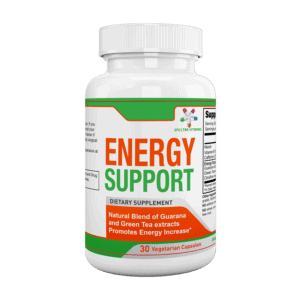
Data Sheet: ENERGY SUPPORT – promotes energy increase ; written by Dr. Neil Ross
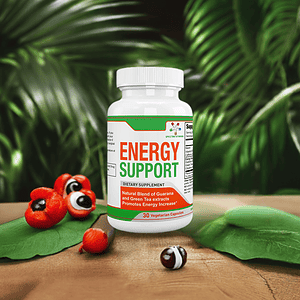
ENERGY SUPPORT was formulated to provide the best energy support for daily life. The formula contains Green Tea extract and Caffeine for quicker energy and Citrulline Malate with Guarana extract for more delayed energy. A review of each ingredient is as follows:
Guarana’s biggest positive effect comes cognitively. It has been shown several times - through clinical studies - that Guarana can improve memory and alertness. In many cases it can also improve a person's mood. One of the more popular clinical studies done on Guarana showed strong positive effects after a dosage of just 75 mg. It has also been shown to improve cognitive and physical abilities in rats (the latter referring to endurance not strength).
A review of the scientific literature reveals that guarana itself has only recently been the subject of clinical studies. As such, studies pertaining to caffeine (also called guaranine) are sometimes used to explain the herb’s action, an approach that presupposes the other constituents are either inactive or of such weak effect they need not be recognized. Although this approach is convenient and provides us with some understanding of the herb’s pharmacological effects, the results of four recent clinical studies suggest that guarana’s effects on cognitive function are due to more than its caffeine content. It has also been suggested that the effects of guarana are longer lasting than caffeine, possibly due to the saponin and tannin content (Babu et al 2008). An additional advantage is that the caffeine in guarana is usually released slower than the caffeine in coffee, which may help a person avoid the sudden loss of energy that often follows high doses of many stimulants. Unlike coffee, Guarana is not nervous but acts as reanimarte and refreshes the body and mind. Its component caffeine (also called guaranine) for its high content in tannins and fibre is absorbed slowly and gently through the body.
Since the guaranine is released slowly, the energy boost that is experienced from guarana is not like that of coffee with its sudden rush and quick drop-off. Rather, it continues to escalate over hours.
While caffeine from beverages provides a short-lived energy burst that excites the body, guaranine has a cooling action that revitalizes and relaxes. This is because guarana contains other components that modify the activity of this substance. The end result is more beneficial to the body than tea or coffee.
Guarana aids in a temporary, natural increase in body temperature and metabolic thermogenesis through nutritional stimulation of the body's ß receptor pathway, which can induce the breakdown and release of stored body fat, thereby allowing stored fats to be turned into energy.
Guarana supports increases in mental alertness, fights fatigue, and increases in stamina and physical endurance. Native to Brazil, guarana is taken daily as a health tonic by millions of Brazilians. It is reported to help overcome heat fatigue.
In the United States, guarana holds a GRAS-status (Generally Regarded as Safe). In a study published in the June 2001 issue of the Journal of Human Nutrition Diet, guarana extract induced weight loss over 45 days in overweight patients taking a mixed herbal preparation containing yerbe mate, guarana and damiana. Body weight reductions were 11.22 pounds in the guarana group compared to less than one pound in the placebo group after 45 days. [22]
Guarana extract and fractions decreased platelet aggregation up to 37% of control values and platelet thromboxane formation from arachidonic acid up to 78% of control values. When platelets hyper aggregate and/or when excess thromboxane formation occurs, an arterial blood clot can develop, resulting in a heart attack or ischemic stroke.[23]
In a 1997 study, guarana increased physical activity of rats, increased physical endurance under stress and increased memory, with single doses as well as with chronic doses. Interestingly enough, the study revealed that a whole guarana seed extract performed better and more effectively than did a comparable dosage of caffeine or ginseng extract.[24]
Another Brazilian research group has been studying guarana's apparent effect of increasing memory. Its antibacterial properties against E. coli and Salmonella have been documented as well.
A 1998 toxicology study with animals have shown that guarana is nontoxic at even high dosages of up to 2 grams per kilogram of body weight. This same study demonstrated guarana's antioxidant properties saying, "Guarana showed an antioxidant effect because, even at low concentrations (1.2 microg/ml), it inhibited the process of lipid peroxidation."[25]
A major advantage to taking guarana in an oil base capsule is its relatively slow release into the body. In a study published in the journal Pharmacology Biochemical Behavior, a comparison was made of the absorption of caffeine from coffee, cola or capsules. Based on saliva caffeine concentrations, the absorption from capsules was about 40% slower than that of coffee or colas. These capsules were not oil-based, yet the rate of caffeine absorption was still significantly slower than coffee or cola.
At least six clinical studies have been conducted to investigate whether guarana affects cognitive function, producing mixed results thus far. Four double-blind studies report that guarana has significant effects on cognitive function and provides evidence that these effects are not just mediated by the herb’s caffeine content (Haskell et al 2005, Haskell et al 2007, Kennedy et al 2004, Kennedy et al 2008). In contrast, two double-blind studies failed to identify significant effects for guarana on cognitive function (Galduroz & Carlini 1994, 1996).
One double-blind, placebo-controlled study assessed the effects of four different doses of guarana (37.5 mg, 75 mg, 150 mg, and 300 mg) in 22 subjects (Haskell et al 2005). Cognitive performance and mood were assessed at baseline and again 1, 3 and 6 hours after each dose using the Cognitive Drug Research computerized assessment battery, serial subtraction tasks, a sentence verification task and visual analogue mood scales. All doses improved picture and word recognition, results on the Bond–Lader visual analogue scales and caffeine research visual analogue scales showing improvements in alertness and reduced ratings of headache. The two lower doses produced better results than the two higher doses, which were associated with impaired accuracy of choice reaction and one of the subtraction tests. Several observations suggest that these effects were not due to caffeine alone. Firstly, effects were still apparent 6 hours after administration and secondly, better results were obtained with a dose of 37.5 mg than 300 mg with a caffeine content of less than 5 mg in the lowest dose. The study was replicated 2 years later, with a double-blind, counterbalanced, placebo-controlled study (Haskell et al 2007). In this study, 26 participants were given the same four doses of a standardized guarana extract. All doses improved mood however cognitive improvements were greatest for the two lower doses, with the 75 mg dose most effective. As there was only 9 mg of caffeine in this dose it is unlikely that the effects can be attributed solely to the caffeine content.
Another double-blind, placebo-controlled study investigated the effects of a single dose of guarana (75 mg) on cognition, in combination with and in comparison to ginseng (Panax ginseng 200 mg) in 28 healthy volunteers (Kennedy et al 2004). Guarana was shown to produce comparable effects to ginseng in improved task performance with all three treatments better than placebo. However, guarana was superior to ginseng in improving the speed of performed tasks. Once again, given the low caffeine content (9 mg) of the guarana extract used in this study, the effects are unlikely to be attributable to its caffeine content alone, particularly as the dose was shown to be as effective as a 16-fold dose of pure caffeine. A later double-blind, randomized, placebo-controlled study of 129 adults tested a multi-vitamin and mineral supplement with added guarana (Berocca Boost with 222 mg guarana and 40 mg caffeine) and found it supported the previous findings that guarana improves cognitive performance. A single dose of the supplement also reduced mental fatigue after sustained mental effort (Kennedy et al 2008).
Two other randomized, double-blind studies have investigated the effects of guarana on cognitive function (Galduroz & Carlini 1994, 1996). One study involving 45 healthy elderly volunteers found that guarana treatment was ineffective (Galduroz & Carlini 1996), which confirmed the findings of a previous study conducted by the same authors (Galduroz & Carlini 1994). Studies in some animal models have produced positive results for both single-dose and long-term administration of guarana, observing a positive effect on memory acquisition and memory maintenance (Espinola et al 1997).
Citrulline is a non-essential amino acid and plays a role in nitrogen balance and metabolic processes. Although not a component of most proteins in the body, citrulline is found in some specialized proteins in the hair, skin and neural cells. It is primarily synthesized from glutamine in the intestines but is also found naturally in trace amounts in some foods.
Citrulline supplied by the diet is efficiently absorbed from the stomach and enters the blood via the major vein draining the digestive system that empties into the liver. Much of it bypasses uptake in the liver and is then circulated for distribution to the kidneys, brain, muscle and other tissues for conversion to arginine.
Supplemental citrulline malate is a salt form of amino acid. The malate, or malic acid, is found in fruits such as apples and enhances the effects of citrulline. Malic acid takes part in aerobic cellular respiration where oxygen and a carbon compound (acetyl Co-A) are used to produce immediate energy and CO2 in the mitochondria of the cell. This is called the Kreb’s cycle. Malate conditions the recycling of lactate and pyruvate promoting efficient energy production and protecting muscles from fatigue.
Citrulline malate improves aerobic performance and capacity by influencing lactic acid metabolism and reducing fatigue. Studies in Europe, where citrulline malate has been used for over 20 years, demonstrate reduction in mental and physical fatigue and exhaustion in geriatric and post-surgery patients. Laboratory studies with rats and microbes support the results seen in humans. Administration of citrulline malate to animals protected against acidosis and ammonia poisoning. In a microbial model, malate accelerated the clearance of ammonium and citrulline facilitated lactate metabolism. The results suggest a synergistic action of the complex.
Supplementation of citrulline malate to humans has shown promising results. French researchers reported in several human studies that blood lactate concentrations were reduced and ammonia elimination was increased after physical exertion. Rapid recovery from physical effort correlated to the disappearance of lactate from blood after performance at a high level of acidosis suggesting an essential role in acid-base balance.
Caffeine - a central nervous system stimulant naturally found in coffee, tea, chocolate, and the kola nut. It is an ingredient in many prescriptions and over the counter drug products including “wake-up” stimulant tablets, headache remedies, and diuretics. The adult oral dose needed to achieve mild stimulation is 100-200mg.
Part of the reason caffeine is classified by the Food and Drug Administration as "generally recognized as safe" (GRAS) is that toxic doses, over 10 grams per day for an adult, are much higher than the typically used doses of under 500 milligrams per day: an over twentyfold difference. A cup of coffee contains 80–175 mg. of caffeine, depending on what "bean" (seed) is used and how it is prepared: by drip, percolation, or espresso. There are several known mechanisms of action to explain the effects of caffeine. The most prominent is to reversibly block the action of adenosine on its receptor, which blocks the onset of drowsiness induced by adenosine. Caffeine also stimulates selected portions of the autonomic nervous system.
Caffeine is a central nervous system and metabolic stimulant,[7] and is used to reduce physical fatigue and to prevent or treat drowsiness. It produces increased wakefulness, faster and clearer flow of thought, increased focus, and better general body coordination.[26] The amount of caffeine needed to produce these effects varies from person to person, depending on body size and degree of tolerance. Desired effects begin less than an hour after consumption, and a moderate dose usually subsides in about five hours.[26]
Caffeine has the desired effect of delaying/preventing sleep, but does not affect all people in the same way. It also improves performance during sleep deprivation.[27] In shift workers it leads to fewer mistakes caused by drowsiness.[28]
In athletes, moderate doses of caffeine can improve sprint,[29] endurance,[30] and team sports performance,[31] but the improvements are usually not substantial. Some evidence suggests that coffee does not produce the performance enhancing effects observed in other caffeine sources.[32]
Green Tea leaves are about 30% of (by weight) either favonols or flavanols, the latter of which is comprised mostly of compounds called catechins. These catechins are then broken down into four main classifications of: epigallocatechin-3-gallate (EGCG), epi-gallocatechin (EGC), epicatechin gallate (ECG) and epicatechin (EC). Although all catechins share similar properties, EGCG appears to be most potent in regards to many of them. These four catechins are the main catechins, although some other isomers or conjugates may be present (with either catechin or epicatechin as a backbone, and varying levels of gallic acids).
Peak serum levels of green tea catechins (Tmax) tend to be around 2 hours after oral consumption, although they can be shifted sooner by consuming them in a fasted state.[13][14][15]
In the fed state, 400mg, 800mg, and 1200mg EGCG result in an AUC (Area under Curve) of 36.7, 90.89 and 299.4min/ug/mL respectively, and in the fasted state result in 126.96, 254.48 and 685.53min/ug/mL respectively. A higher inter-individual variation exists.[13] The Cmax at the same dosages were 798.7±573.1, 1,522.4±1,357.8 and 3,371.6±1,651.2ng/mL fasted compared against 141.8±89.1, 294.0±113.5, and 923.6±755.3ng/mL; respectively.[13] Other studies note that a once daily oral dose of 400mg hits a Cmax of approximately 234.9±140.9ng/mL with a 24-hour AUC of 95.6±46.8min·μg/ml, and an 800mg dose hits a Cmax of 390.3±231.4ng/mL with the AUC as 145.6 ± 85.1min·μg/ml.[10] Increasing the dosage to 1.5g has a Cmax (EGCG) of 326ug/mL whereas increasing the dose further to 3.0g increased the Cmax significnatly (2.5-3.4-fold) and shifted the Cmax to the left (sooner).[16]
Green tea affects thermogenesis via synergistically acting in concert with its Caffeine content, and the addition of 300mg EGCG to 200mg caffeine can increase the thermic response to food more than 200mg caffeine.[69] Caffeine is able to increase noradrenaline levels in the body, which is synergistic with EGCG's ability to inhibit the enzyme catechol-o-methyl transferase (COMT)[24] which degrades catecholamines like noradrenaline[23] and methylates polyphenols. The end result of the pairing is higher levels of catecholamines induced by caffeine, and this synergism seems to be equipotent at various dosages of EGCG.[70] Caffeine also inhibits the phosphodiesterase enzyme, which degrades cAMP. It appears that this pathway (catechol-o-methyltransferase inhibition) may be active in vivo.[71]
In studies with beta-adrenergic antagonists (beta-blockers) fat burning effects of green tea are reduced partially, suggesting that green tea exerts fat-burning effects via beta-adrenergic agonism and other means as well.[72]
Due to EGCG being able to easily cross the blood brain barrier [114] and (at 300mg) increasing brain activity up to 2 hours after ingestion, biological relevance for cognition has been investigated.[115] However, when subjects are measured a similar dose of 270mg was found to not influence mood or cognition.[116] A lower dose of 135mg EGCG reduced cerebral blood flow to the frontal cortex, but was not associated with lesser cognitive abilities.[116]
EGCG, when administered I.V to rats 60 minutes prior to a learning event (passive avoidance test); however, high doses were tested (and statistical significance seen at 15mg/kg bodyweight).[117] Lower dosages fed orally (0.5% of feed) for 8 weeks seems to improve memory in aged rats.[118] These results were replicated with injections of 10-20mg/kg, where an improvement in spatial memory was observed.[119]
Mechanistically, 5-40uM of EGCG has been shown to augment proliferation of adult neural progenitor cells (NPCs) in vitro, although these concentrations were unable to induce differentiation with higher (80uM) concentrations still augmenting proliferation but actively inhibiting differentiation.[119] This was seen in vivo with 10-20mg/kg injections of EGCG in old rats.[119] An additional mechanism may be acetylcholinesterase inhibition, as less activity was noted in the brains of aged rats fed green tea catechins.[118]
In a mouse study on chronic fatigue syndrome, it was found that green tea at 25-100mg/kg bodyweight taken before forced swim tests was able to preserve physical performance in the fatigued state and acted to normalize some brain biomarkers that are changed by chronic stress; TNF-a and glutathione (increase and decrease; respectively).[122] Some other parameters of chronic fatigue, such as weight loss and spleen and thymus hypertrophy, were alleviated at 50 and 100mg/kg bodyweight.[122]
Niacin, or vitamin B-3, is part of the B complex of vitamins, and all of these work to process the food you consume. Without niacin, your body would not be able to convert protein, carbs and fat into usable energy. Niacin helps increase energy through improving food utilization and has been used beneficially for treating fatigue, irritability, and digestive disorders, such as diarrhea, constipation, and indigestion. It may also stimulate extra hydrochloric acid production. Niacin, mainly as nicotinic acid, helps in the regulation of blood sugar (as part of glucose tolerance factor) in people with hypoglycemia problems and gives all of us a greater ability to handle stress. It is helpful in treating anxiety and possibly depression. A large number of references on this vitamin are provided.
Thus, as the references indicate the Energize capsule is designed to provide a quick energy boost and a delayed energy to help later on.
REFERENCES
Guarana

Simply send the bottle back—opened or not—and we’ll refund you. No hassle.